Warning: Undefined array key "url" in /home/www/divi/wp-content/plugins/seo-by-rank-math/includes/modules/schema/snippets/class-author.php on line 41
Pantomimes, Parties and Presents

Pantomimes, Parties and Presents

Pantomimes, Parties and Presents

Many British companies organise Christmas parties for their employees, but also for their employees’ children. With games and prizes for the winners, Christmas songs, entertainment, face painting, and Father Christmas and presents for the children.

The company my father worked for organised a Christmas party each year for the younger family members. The older children were taken up to London to visit a pantomime. 

A pantomime is a traditional British Christmas play based on a well-known fairytale (like Cinderella, Peter Pan, Aladdin or Snow White and the Seven Dwarfs), but with lots of slapstick comedy and audience participation.

Have you ever seen one before? 

If not, have a look at this YouTube video here

I just hope you won’t be too shocked. innocent
Angel Gabriel and the Others

Angel Gabriel and the Others

Angel Gabriel and the Others

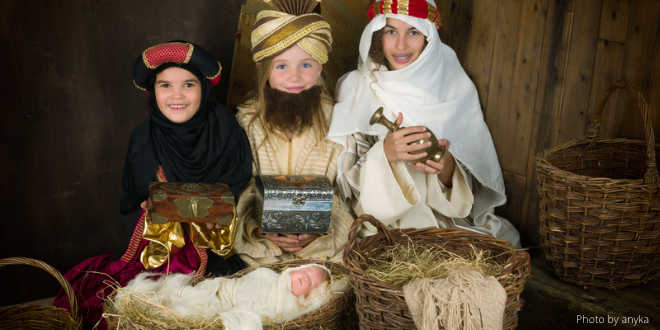
One of the highlights of my primary school days was when I was Angel Gabriel in the school’s Nativity play. 

The pupils in my class dressed up as Mary, Joseph, angels, shepherds, stars, wise men and innkeepers. And with someone’s doll performing the role of baby Jesus.

Together we acted out the biblical story of the Nativity on the stage for our families and friends. 

It’s a tradition in Britain.

However, last year was rather difficult. But some creative teachers had an idea.

Here’s a short video of how one primary school swapped the stage for the screen

Did You Put Your Shoes Out?

Did You Put Your Shoes Out?

Did You Put Your Shoes Out?

Today is the Feast of St. Nicholas. (In the English-speaking world, we know him as Father Christmas or Santa Claus.)

In Germany, it’s the day that children wake up to find their shoes filled with sweets and presents. But only if they cleaned them the night before. (Well, that was the custom in our household! wink)

For children in Britain, the 6th of December means nothing more than eating another chocolate from their Advent calendar!

How Christmas Pudding Might Bring You Luck

How Christmas Pudding Might Bring You Luck

How Christmas Pudding Might Bring You Luck

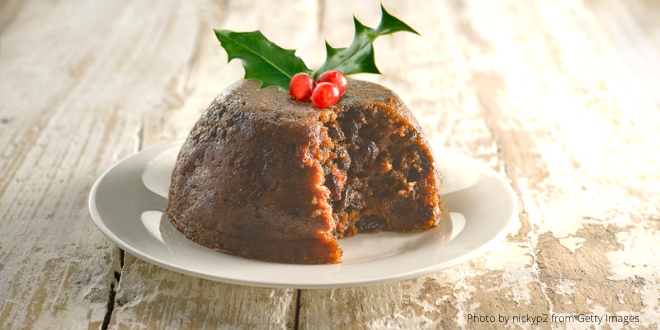
Christmas pudding is generally made five weeks before Christmas, on or after the last Sunday before the first Advent. 

Have you ever tried it?

It’s made with all kinds of dried fruits, nuts, spices and black treacle—and usually steamed for hours. When it’s ready, it’s presented with a sprig of holly, doused in brandy and set alight.

As tradition has it, each household member stirs the pudding and makes a wish. Placing a silver coin in the pudding is said to bring luck to the person who finds it.

To tell the truth, I’ve never liked eating Christmas pudding. But I always had two helpings at school before breaking up for the holidays, hoping to get that silver sixpence!

Any idea why we eat Christmas pudding? Watch this short film to find out.

No Christmas Without Christmas Cake

No Christmas Without Christmas Cake

No Christmas Without Christmas Cake

Stir-up Sunday* was last Sunday and would have been a great time to bake your Christmas cake. 

But why not make it today?

This recipe here might inspire you.

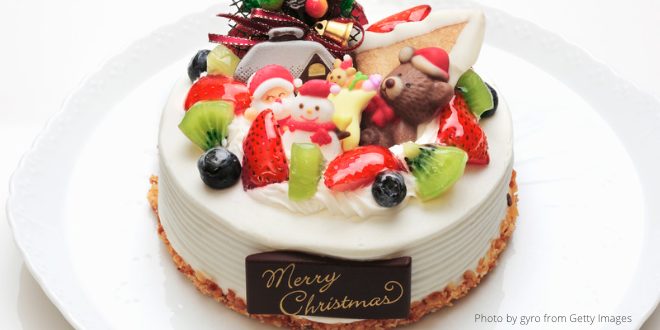
What I always enjoy most about preparing the Christmas cake is decorating it—with marzipan, icing and a few cake decorations. 

If you decide to go ahead and bake a cake, you might need some ideas on how to decorate it.

And if you create a real British Christmas cake, you might like to send me a photo. smile

*Stir-up Sunday is a centuries-old tradition where home cooks spend the last Sunday before Advent ‘stirring up’ their Christmas pudding.