Warning: Undefined array key "url" in /home/www/divi/wp-content/plugins/seo-by-rank-math/includes/modules/schema/snippets/class-author.php on line 41
The 16 Types of Meetings

The 16 Types of Meetings

The 16 Types of Meetings

If I asked you to name the 16 types of business meetings, would you be able to name them?

Lucid has an interactive chart of the 16 types—divided into three categories—where you can learn about each type of meeting and how teams can use them to solve problems, answer questions and get work done.

What kind of meetings do you attend regularly?

Pretending You’re Confident

Pretending You’re Confident

Pretending You’re Confident

“Confidence is a habit that can be developed by acting as if you already had the confidence you desire to have.”

Brian Tracy

So what can we do?

Amy Cuddy recommends that we change our posture for two minutes. Expand ourselves, by adopting a high-power pose. Very much like superman here.

“Tiny tweaks can lead to big changes”, according to Amy.

It might be worth giving it a try if you need a confidence boost. What do you think?

Are You Lonely?

Are You Lonely?

Are You Lonely?

Why are so many successful people lonely?

Dan Pink talks to author Arthur Brooks who recommends that we ask ourselves, “Are my friends real friends or deal friends?”

Watch this short ‘Pinkcast‘ to find out what the difference is, and why we need more useless, real people in our lives!

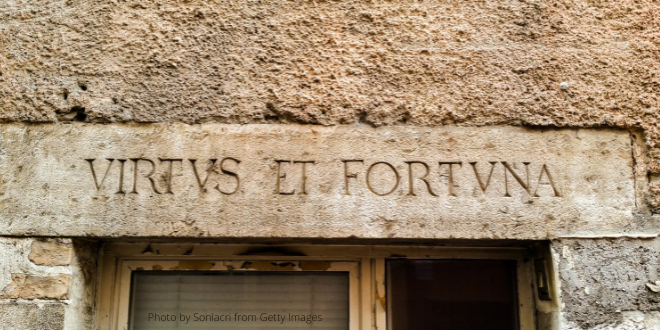
Latin Terms You Need To Know

Latin Terms You Need To Know

Latin Terms You Need To Know

If you want to drive people away, use Latin terms in your writing!

Why? Because not everyone will understand them.

But it’s good to know what these words and expressions mean if ever you read or hear them.

Here are the most common ones:

et cetera (etc.)               and so on, and more
exempli gratia (e.g.)     for example
id est (i.e.)                       that is / in other words
et alia (et al.)                   and others
circa (c.)                            around / about
de facto                            in reality
ergo                                  therefore
per se                                by itself / essentially
re                                       about | concerning
vice versa                         positions reversed
pro forma                        for form’s sake
nota bene (NB)               take note | worth noting
per                                     for each
per annum                       for each year
per capita                         for each head
post scriptum (PS)         written later
versus (vs.)                       against

I confess that I still use PS, versus and vice versa. Old habits die hard, don’t they?

And you? Do you use any of these words and expressions in your writing?