Hallo Oma

Hallo Oma

Hallo Oma

“Hallo Oma,” the sweet voice of my young grandson echoes through the phone.

It’s his first two-word phrase.

Or rather, the first two-word phrase directed at me.

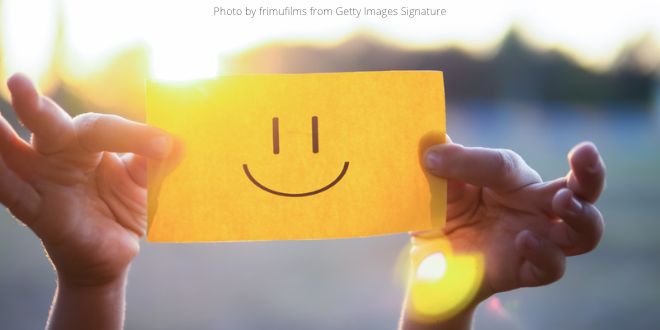
A phrase that brings a smile to my face and warms my heart.

A phrase I’ve been waiting for. For some time.

Juggling three languages can’t be easy for the little guy.

That’s why I’m so enthralled.

It reminds me of Anne Frank’s words: “Think of all the beauty still left around you and be happy“.

In the midst of our busy lives, moments like these remind us to cherish the little things.

They remind us of what truly matters in life.

I thought you might like to be reminded, too. embarassed

——–

enthralled = begeistert, bezaubert
to cherish = hegen, wertschätzen, schätzen

Life Bursts With Miracles

Life Bursts With Miracles

Life Bursts With Miracles

Around us, life bursts with miracles:—a glass of water, a ray of sunshine, a leaf, a caterpillar, a flower, laughter, raindrops. If you live in awareness, it is easy to see miracles everywhere. Each human being is a multiplicity of miracles. Eyes that see thousands of colors, shapes, and forms; ears that hear a bee flying or a thunderclap; a brain that ponders a speck of dust as easily as the entire cosmos; a heart that beats in rhythm with the heartbeat of all beings. When we are tired and feel discouraged by life’s daily struggles, we may not notice these miracles, but they are always there.

Thich Nhat Hanh

If you’re looking for some words of wisdom, you need look no further than Thich Nhat Hanh’s quotations.

His words are like a beautiful song. Lifting our spirits and inspiring hope.

A Very Common Question

A Very Common Question

A Very Common Question

You’ve probably heard or even used the question, “What do you do for a living?” time and time again.

Try these three questions to add variety or flair to your conversations:

  • What projects or initiatives are you currently working on?
  • How did you become interested in your field of work?
  • What do you enjoy most about your job or profession?

—————

What do you do for a living? = Was machen Sie beruflich?
time and time again = over and over again, again and again, repeatedly, on multiple occasions

Let’s Save Ralph

Let’s Save Ralph

Let’s Save Ralph

“No animal should suffer and die in the name of beauty.”

That’s the message behind “Save Ralph“—a 4-minute-long stop-motion documentary-style film, written and directed by Spencer Susser and released by the Humane Society International.

Ralph is a rabbit who is used to test cosmetic products.

In the interview, Ralph talks about how his job has left him blind in one eye and deaf in one ear. And he gives us a peek into his dreadful daily routine as a tester in a laboratory.

What can we do to save Ralph?

The least we can do is to buy cruelty-free cosmetic products.

And learn more about the Save Ralph campaign at the Humane Society International’s dedicated website.

What’s Your Love Language?

What’s Your Love Language?

What’s Your Love Language?

In his book “The Five Love Languages: How to Express Heartfelt Commitment to Your Mate,” Dr. Gary Chapman was the first to talk about the five love languages.

Dr. Chapman says that people have different ways of giving and receiving love.

He found five main “love languages”:

  1. Acts of Service
    People who use this love language feel loved when others do things for them—like cooking a meal, doing the dishes or running errands. These things show how much their friends and family care about them and want to help.
  2. Gifts
    People who use this love language feel loved when their loved ones give them gifts that show they were thinking of them. The thought and work that went into the gift are more important than how much it cost.
  3. Quality Time
    This love language is all about spending time with people you care about without phones or TV. People who use this love language feel loved when their loved ones give them their full attention and go out of their way to spend time with them.
  4. Words of Affirmation
    People who use this love language feel loved when they hear words like “I love you” and “thank you” spoken to them.
  5. Physical Touch
    People who use this love language know that they are loved when they hug, hold hands or cuddle. Touch is important to them and makes them feel close to the people they love.

Everyone has a main way of showing love, but they may also enjoy and feel loved in other ways.

Understanding our own love language and the love language of our partner or other important people can improve communication and strengthen relationships.

Interested in discovering your own primary love language now?

Haiku-licious: A Tasty Treat for Language Lovers

Haiku-licious: A Tasty Treat for Language Lovers

Haiku-licious: A Tasty Treat for Language Lovers

Have you ever written a Haiku?

“Sorry, a Haiku?” you might ask. “What is it?”

It’s a tiny poem like a little package with three lines inside.

The first line has five syllables, the second line has seven, and the third line has five again. 

The words are like a painting. They paint a vivid picture of nature or feelings in our heads.

They’re like secret messages sent all the way from Japan. surprised

Over to you

If you like playing with words, you might like to create a Haiku (using the 5/7/5 rule), and send it to me.

I could post it in a future Spark. kiss

Here are my two Haikus about Zoom

On Zoom calls all day,
From the comfort of my home.
Work and life, blurred lines.

Back-to-back Zoom calls.
Screen—my only window now,
Zoom fatigue sets in. 

Are you prepared to take the challenge?