Warning: Undefined array key "url" in /home/www/divi/wp-content/plugins/seo-by-rank-math/includes/modules/schema/snippets/class-author.php on line 41
Why Do Migrants Have Smartphones?

Why Do Migrants Have Smartphones?

Why Do Migrants Have Smartphones?

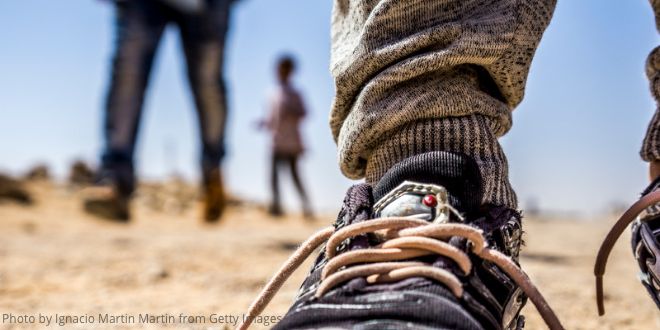
Imagine you come across a group of migrants or refugees and notice that they all have smartphones.

Immediately, a question pops into your mind: “Why do they have these devices?”

It’s a question that often carries underlying biases and prejudices.

But here’s the thing: smartphones have actually become a lifeline for many migrants and refugees—an indispensable tool that helps them navigate through their challenging journeys.

Click here to watch a short video by the BBC that tackles this very question.

It takes us on an eye-opening journey, allowing us to experience the realities refugees face. It shines a light on why smartphones have become such a vital part of their lives.

We learn that smartphones are not just devices for social media or entertainment. They are lifelines connecting migrants and refugees to vital resources, information and loved ones left behind.

These phones help them navigate unfamiliar territories, access essential services and communicate with support networks.

This remarkable video is a powerful reminder that, as observers, we should question our initial assumptions and seek a deeper understanding.


Saying Sorry the Right Way

Saying Sorry the Right Way

Saying Sorry the Right Way

Apologising can be difficult, but it’s important to do it right.

In this short TED-Ed video, social psychologist Guy Winch gives us some great tips on how to apologise effectively.

Be sincere. This is the most important tip. If you’re not sincere, the other person will be able to tell—and your apology will be less effective.

Be specific. Don’t just say “I’m sorry.” Explain what you did wrong and how it affected the other person. This will help the other person understand why you’re apologizing and how your actions made them feel.

Focus on the other person’s feelings. Let the other person know how your actions made them feel. This shows that you’re taking their feelings into account and that you’re sorry for the pain you caused them.

Take responsibility. Don’t make excuses or blame others. Own up to your mistake and take responsibility for your actions. This shows that you’re mature and that you’re willing to learn from your mistakes.

Make amends. If possible, try to make things right. This could mean apologising in person, giving the other person a gift, or doing something else to show that you’re sorry.

Be patient. It may take time for the other person to forgive you. Be patient and understanding, and continue to show them that you’re sorry.

If you’ve ever found it difficult to apologise, I encourage you to watch the TED-Ed video and follow these tips.

Apologising effectively can help us repair our relationships and build trust.

    10 More Thoughtful Ways to Say Thank You

    10 More Thoughtful Ways to Say Thank You

    10 More Thoughtful Ways to Say Thank You

    Are you tired of saying “thank you” all the time?

    Here are 10 more thoughtful ways to express your gratitude:

    • I am so grateful for your help.
    • You made me smile. 
    • I don’t know what I would have done without you.
    • How thoughtful of you. 
    • That’s kind of you. 
    • You made my day.
    • I am so touched by your kindness.
    • Your support means the world to me. 
    • You are a lifesaver.
    • I am so lucky to have you in my life.

    I hope this list helps you express your gratitude in a more meaningful and thoughtful way. smile

    Mind Your Idioms: Complete These Well-Known British Phrases!

    Mind Your Idioms: Complete These Well-Known British Phrases!

    Mind Your Idioms: Complete These Well-Known British Phrases!

    Do you think you have a good grasp of the English language?

    Well, it’s time to put your knowledge to the test!

    Get ready to mind your idioms and see if you can get a perfect score!

    Here are ten well-known British idioms for you to fill in the blanks to complete:

    1. Bob’s your ____.
    2. Don’t count your chickens before they’re ____.
    3. You can’t have your cake and ____ it.
    4. The ball is in your _____.
    5. A penny for your _____.
    6. The early bird catches the ____.
    7. When in Rome, do as the ____ do.
    8. A watched pot never ____.
    9. Actions speak louder than _____.
    10. You can lead a horse to water, but you can’t make it ____.

    Good luck!

    And here are the answers:
    1: uncle, 2: hatched, 3: eat, 4: court, 5: thoughts, 6: worm, 7: Romans, 8: boils, 9: words, 10: drink.

    Finding Joy in Life’s Obstacles and Beauties

    Finding Joy in Life’s Obstacles and Beauties

    Finding Joy in Life’s Obstacles and Beauties

    When you are a young person, you are like a young creek, and you meet many rocks, many obstacles and difficulties on your way. You hurry to get past these obstacles and get to the ocean.

    But as the creek moves down through the fields, it becomes larges and calmer and it can enjoy the reflection of the sky. It’s wonderful. You will arrive at the sea anyway so enjoy the journey. Enjoy the sunshine, the sunset, the moon, the birds, the trees, and the many beauties along the way. Taste every moment of your daily life.
    Thich Nhat Hanh

    Thich Nhat Hanh’s metaphor of a young creek encountering obstacles on its way to the ocean is a beautiful reminder to embrace life’s journey.

    Let’s take Thich’s wisdom with us and enjoy every moment of our daily lives.

    By the way, I had the privilege of spending a day with this revered Zen master, teacher and poet in Waldbröl many years ago. It was an unforgettable experience that left a lasting impact on me.

    Have you had the opportunity to meet any inspiring figures like Thich Nhat Hanh?