What’s Your Love Language?

What’s Your Love Language?

What’s Your Love Language?

In his book “The Five Love Languages: How to Express Heartfelt Commitment to Your Mate,” Dr. Gary Chapman was the first to talk about the five love languages.

Dr. Chapman says that people have different ways of giving and receiving love.

He found five main “love languages”:

  1. Acts of Service
    People who use this love language feel loved when others do things for them—like cooking a meal, doing the dishes or running errands. These things show how much their friends and family care about them and want to help.
  2. Gifts
    People who use this love language feel loved when their loved ones give them gifts that show they were thinking of them. The thought and work that went into the gift are more important than how much it cost.
  3. Quality Time
    This love language is all about spending time with people you care about without phones or TV. People who use this love language feel loved when their loved ones give them their full attention and go out of their way to spend time with them.
  4. Words of Affirmation
    People who use this love language feel loved when they hear words like “I love you” and “thank you” spoken to them.
  5. Physical Touch
    People who use this love language know that they are loved when they hug, hold hands or cuddle. Touch is important to them and makes them feel close to the people they love.

Everyone has a main way of showing love, but they may also enjoy and feel loved in other ways.

Understanding our own love language and the love language of our partner or other important people can improve communication and strengthen relationships.

Interested in discovering your own primary love language now?

Haiku-licious: A Tasty Treat for Language Lovers

Haiku-licious: A Tasty Treat for Language Lovers

Haiku-licious: A Tasty Treat for Language Lovers

Have you ever written a Haiku?

“Sorry, a Haiku?” you might ask. “What is it?”

It’s a tiny poem like a little package with three lines inside.

The first line has five syllables, the second line has seven, and the third line has five again. 

The words are like a painting. They paint a vivid picture of nature or feelings in our heads.

They’re like secret messages sent all the way from Japan. surprised

Over to you

If you like playing with words, you might like to create a Haiku (using the 5/7/5 rule), and send it to me.

I could post it in a future Spark. kiss

Here are my two Haikus about Zoom

On Zoom calls all day,
From the comfort of my home.
Work and life, blurred lines.

Back-to-back Zoom calls.
Screen—my only window now,
Zoom fatigue sets in. 

Are you prepared to take the challenge?

Why I Don’t Like the Term “Human Resources”

Why I Don’t Like the Term “Human Resources”

Why I Don’t Like the Term “Human Resources”

The famous management expert Henry Mintzberg once said:

An enterprise is a community of human beings, not a collection of human resources.

If businesses want to create a more positive, productive, and supportive work environment, then they need to stop treating their employees like resources to be managed and start treating them like valuable human beings.

We are in a war for talent.

In our exciting, post-pandemic era, the success or failure of a company will depend on how it treats its employees.

I wonder how many realise this.

The Question Is Like a Flower

The Question Is Like a Flower

The Question Is Like a Flower

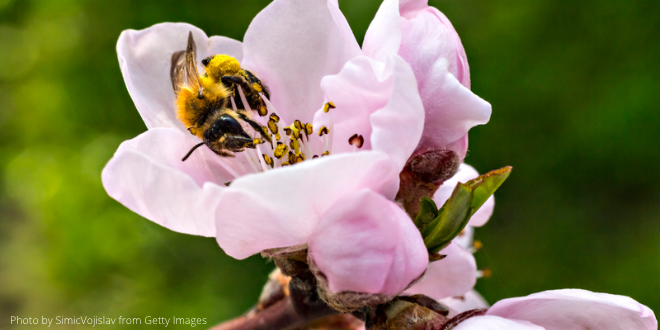
The question is like a flower that beckons to the bee, and the responses pollinate the ensuing conversation.
Christina Baldwin + Ann Linnea

Asking questions is like planting a flower in a garden.

Just as a flower needs bees to help it grow and produce more flowers, our responses to questions can help to “pollinate” our conversations, making them more interesting and productive.

When we ask questions, we’re inviting other people to share their thoughts and ideas with us. This can help to enrich and deepen our conversations.

Why not come and experience this for yourself in one of our next Speed Networking sessions?

You’ll see that I just love asking questions.

Perhaps it’s because I don’t want to be seen as a fool for life!

Remember what Confucius said?

“The man who asks a question is a fool for a minute, the man who does not ask is a fool for life.” 

———-

to pollinate – bestäuben, besamen, befruchten

Why Write Clearly?

Why Write Clearly?

Why Write Clearly?

I could have asked Google.

But I chose to ask ChatGPT instead.

I read the following sentence on Twitter: “you’ve been subbed for X days now, congrats”.

“Congrats” is short for “Congratulations”.

But I had never heard the term “subbed” before.

So I asked ChatGPT.

Within seconds, the response appeared: “You’ve been subscribed for x days.

Ah, now all was clear.

Insiders* often use special words and abbreviations because they are familiar with the subject.

These terms are part of their everyday language.

Why am I telling you this?

By using simple and straightforward language, we can make it easier for everyone to understand.

It’s the best way to avoid confusion or misunderstandings.